
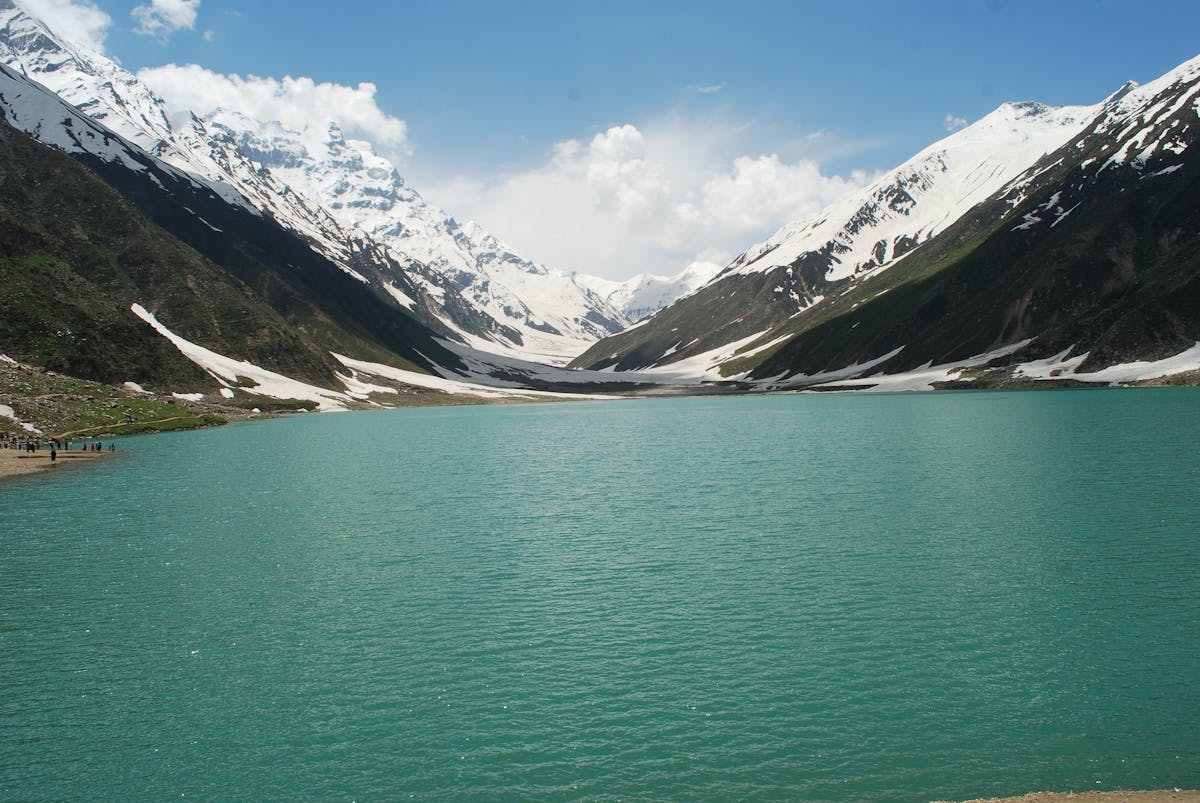
If Hunza is Pakistan’s poster child for international tourism and Swat is the marketing slogan, Naran Kaghan is the valley that domestic Pakistanis actually book trips to every summer. Roughly 5 to 7 hours’ drive north from Islamabad, the Naran Kaghan travel guide trail packs glacier-fed rivers, an alpine lake straight out of folklore, and one of the most scenic mountain passes in South Asia into a single weekend itinerary.
The valley sits in the Mansehra District of Khyber Pakhtunkhwa, runs alongside the Kunhar River, and climbs from around 980 metres at Balakot to 4,170 metres at Babusar Top. That altitude range is why it stays cool when the rest of Pakistan is boiling in June, and why the road closes under snow for half the year.
When Is the Best Time to Visit Naran Kaghan?
The best time to visit Naran Kaghan is between late May and mid September. Outside that window, the road past Naran toward Babusar Top is closed by snow, and Saif-ul-Malook Lake remains frozen until late June in cold years. Peak season is July and August, when domestic tourist traffic doubles and hotel rates often triple over weekend nights.
For travellers who prefer fewer crowds and clearer mountain views, the first two weeks of September are widely considered the sweet spot. Day temperatures sit around 15 to 22 degrees Celsius, nights cool to single digits, and the valley’s poplar trees begin their golden autumn shift.
The 7 Essential Stops Along the Naran Kaghan Route
The classic itinerary follows the Kunhar River north, with seven stops that most well-planned trips include. Each adds something the others do not, and skipping any of them tends to feel like a missed opportunity by the time you reach the top of the valley.
1. Balakot
Balakot is the gateway town where the Karakoram Highway feeder road meets the Kaghan Valley road. Most travellers stop here for fuel, fresh trout at a riverside dhaba, and a brief visit to the memorial commemorating the 2005 Kashmir earthquake, in which Balakot was the worst hit Pakistani town.
2. Kaghan Village
Kaghan, about 85 kilometres north of Balakot, gives the valley its name and is the traditional overnight stop on slow itineraries. The local Hindko-speaking community runs the small Kaghan bazaar, and a short ride brings you to the cliffside views over the Kunhar.
3. Naran Town
Naran, at roughly 2,400 metres, is the main tourist base. The town has the largest concentration of hotels, restaurants, and tour operators in the valley, and is the launching point for both Saif-ul-Malook Lake and Babusar Top day trips. Most travellers spend two nights here.
4. Saif-ul-Malook Lake
Saif-ul-Malook sits at 3,224 metres in a glacial basin south of Malka Parbat, the second highest peak of the Kaghan Valley at 5,290 metres. The lake is reached by 4×4 jeep ride from Naran, roughly 9 kilometres of rough mountain track, and is the single most photographed location in the entire valley. The folktale of Prince Saif-ul-Malook and the fairy Badr-ul-Jamala is taught in Pakistani schools and explains the lake’s near mythological status.
5. Lulusar Lake
Lulusar, at 3,410 metres, is the largest natural lake in the Kaghan Valley and the actual source of the Kunhar River. The lake sits directly on the main road between Naran and Babusar, so it is included in every Babusar Top day trip. The deep turquoise water and grass meadows make it a favoured Instagram stop.
6. Babusar Top
Babusar Pass, at 4,170 metres, is the highest road accessible point on the Kaghan trail and one of the highest mountain passes in Pakistan. From the top you can see the western Himalayas, Nanga Parbat on a clear day, and the descent into Chilas and the Karakoram Highway corridor. Altitude sickness is a real risk for first time visitors, so plan a leisurely ascent.
7. Jalkhad and the Polo Grounds
Jalkhad is the small police checkpoint settlement at the upper end of Naran, and the spot where most trekkers begin the route to Lalazar meadow and the Polo Ground at 4,000 metres. The Polo Ground is a flat plateau that hosts informal local horse and yak rides in summer.
Where to Stay and What It Costs
Naran town has accommodation across every price band. Budget guesthouses cost roughly PKR 3,000 to 5,000 per room per night in shoulder season, mid range hotels with valley views run PKR 8,000 to 15,000, and the small handful of premium properties such as Pine Park and PC Bhurban affiliates can cross PKR 25,000 in peak July. Kaghan village offers cheaper, simpler options for travellers wanting a calmer base.
For trekkers and budget travellers, the government Tourism Department guesthouse at Naran offers basic rooms at well below market rates, but they book out months ahead. Camping is permitted in designated grounds near Naran and Lulusar.
How to Get There and What to Pack
The standard route from Islamabad runs via the Hazara Motorway (M-15) to Mansehra, then the N-15 through Balakot into the Kaghan Valley. Total drive time from Islamabad to Naran is around 7 hours in fair weather, longer if there is convoy traffic on weekends. From Lahore add roughly 5 hours.
Essential packing items: layered clothing including a warm fleece for evenings, sunscreen and UV sunglasses (altitude UV is intense), motion sickness pills for the Saif-ul-Malook jeep ride, and a reliable headlamp because hotel power supply north of Kaghan is intermittent. Carry cash because card payment is inconsistent above Balakot.
For context on a related northern travel destination, see our guide to the Swat Valley.
Key Takeaways
- Best season: Late May to mid September, with first two weeks of September offering the best balance of weather and crowd levels.
- Highlights: Saif-ul-Malook Lake (3,224 m), Lulusar Lake (3,410 m), Babusar Top (4,170 m).
- Base camp: Naran town has the widest hotel and restaurant selection in the valley.
- Drive time: 7 hours from Islamabad, 12 hours from Lahore by road.
- Critical gear: Layered clothing, altitude readiness, cash, and a flexible itinerary because weather decisions are made on the day.
Which Naran Kaghan stop are you most excited to visit, and which one would you skip? Tell us in the comments.