
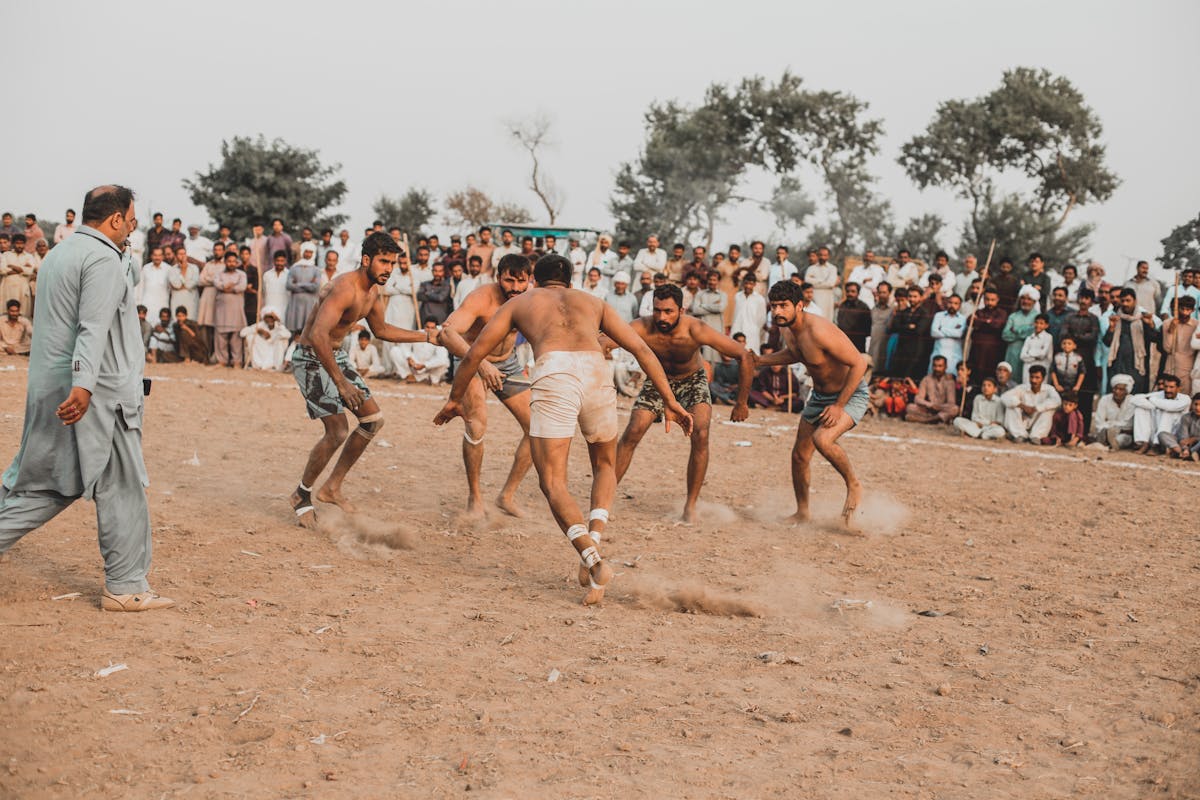
Long before the first floodlit Pakistan Super League fixture, before hockey’s Champions Trophy years, and well before squash gave the country its golden generation, Pakistani villages were already playing the sport that may now be the most followed traditional game in the country. Pakistan Kabaddi has grown from a Punjab-dominated village pastime into a serious international competitor with a Circle Style World Cup title to its name.
What separates kabaddi from almost every other Pakistani sport is its grassroots authenticity. The matches happen on dust grounds, the crowds are local, and the players are mostly drawn from rural districts rather than urban academies. That structure has produced a remarkable national talent pool with very little federal investment.
The Two Styles of Kabaddi Pakistan Actually Plays
Pakistan plays two distinct styles of kabaddi, Circle Style and Standard Style, and the difference matters more than most casual fans realise. Circle Style, the dominant Punjab village format, is played on a round dirt court with raiders sprinting in chanting “kabaddi, kabaddi” and tagging defenders in lightning-fast bursts before darting back across the line.
Standard Style, played indoors on a rectangular mat with strict International Kabaddi Federation rules, is the format used at the Asian Games and the Indian-dominated Pro Kabaddi League. Pakistan’s strength has historically been Circle Style, physical, fast, and tailored to the Punjabi rural body type, while Standard Style remains a developing competency.
Is Kabaddi Pakistan’s National Game?
Kabaddi is not Pakistan’s official national sport, that title belongs to field hockey, but in cultural terms it is arguably the most-watched traditional game in the country. Village tournaments in districts like Sialkot, Gujranwala, Faisalabad and Sheikhupura routinely draw crowds in the thousands, and broadcasters now stream marquee fixtures live.
The everyday reach of the sport is what surprises outsiders. Kabaddi is taught informally in rural schools, played in factory leagues, and serves as a cultural backdrop at melas, festivals and even wedding celebrations across central Punjab. Few Pakistanis grow up without watching at least one live kabaddi match.
The Sialkot Belt
If kabaddi has a heartland, it is the Sialkot-Gujranwala-Daska belt in central Punjab. Most of Pakistan’s top Circle Style raiders and defenders over the past three decades have come from villages in this triangle, where local promoters fund teams and bilateral tournaments are held year-round.
The 2020 Kabaddi World Cup Title
Pakistan’s most significant international kabaddi moment came at the 2020 Kabaddi World Cup (Circle Style), hosted at Punjab Stadium in Lahore. The Pakistani team, led by veteran raiders and supported by raucous home crowds, defeated India in the final on 16 February 2020 to lift the trophy on home soil.
The victory was historic regardless of the controversies that surrounded the tournament organisation and the composition of the visiting Indian squad. For Pakistani kabaddi, it was the first major global title that put the national team on a pedestal alongside the country’s better-known sporting achievements.
Modern Stars: Shafiq Chishti, Nasir Aliwal and the New Generation
The faces of Pakistani kabaddi over the past decade include raiders like Shafiq Chishti, Mohammad Sarwar and Nasir Aliwal, whose darting raids have become signature moments at international fixtures. Defenders such as Irfan Mana have anchored Pakistani sides in tournaments across Asia and Europe.
The newer generation has begun moving beyond Punjab, players from Sindh’s interior districts and Khyber Pakhtunkhwa are showing up in national-level Standard Style trials, broadening the talent base. Domestic leagues, including the recently revived Pakistan Kabaddi Premier League, have helped formalise pathways into the national team.
What’s Holding Pakistan Kabaddi Back?
The biggest obstacles for Pakistani kabaddi are structural rather than athletic. Funding from the Pakistan Sports Board has historically lagged behind cricket, hockey and even squash, leaving the Pakistan Kabaddi Federation reliant on private sponsors and political patronage in Punjab.
The other gap is professional infrastructure. India’s Pro Kabaddi League turned Standard Style kabaddi into a billion-dollar television product, with athletes earning salaries that dwarf anything available in Pakistan. Without a comparable domestic league, Pakistani talent struggles to monetise its skill base or sustain a long professional career.
For a broader sense of where Pakistan’s traditional sports stand today, see our piece on the revival of Pakistani hockey.
The Next Five Years for Pakistani Kabaddi
The medium-term outlook depends on three things: a sustainable domestic league that pays athletes, consistent Asian Games and Asian Championship campaigns in Standard Style, and a continued investment in coaching staff who can bridge the gap between Circle and Standard formats. None of these are out of reach, but each requires patient federal backing.
The grassroots pipeline is not the concern, it never has been. As long as the village grounds of Punjab keep producing teenagers who can run, tackle and chant for a living, Pakistan will have a kabaddi team. The question is whether the country can finally build the professional layer the sport deserves.
Key Takeaways
- Two styles, Circle Style (Punjab village format) and Standard Style (Asian Games format), define Pakistani kabaddi.
- 2020 World Cup: Pakistan won the Circle Style title at home, beating India in the Lahore final.
- Sialkot-Gujranwala-Daska remains the geographic heartland of Pakistani kabaddi talent.
- Funding gap versus cricket and hockey is the sport’s biggest structural limitation.
- The next leap requires a sustainable domestic league and stronger Standard Style coaching investment.
Have you watched a live kabaddi match in your village or city, and which raider or defender do you remember most? Share your story in the comments.